

Work Readiness Institute Australia (WRIA) is a subsidiary of Global Centre for Work-Applied Learning (GCWAL).
WRIA is committed to developing the human, business and management skills of people in organisation who are in the transition of change in their jobs. It offers programmes using the Work-Based Learning (WBL) approach for:
- graduates and non-managerial staff, and
- new managers and managers in transition
Whilst GCWAL offers change management programmes for middle, senior and top management, WRIA offers programmes for individual change and effectiveness.
The delineation of the programmes offered by WRIA and GCWAL is shown in the diagram which is an adaptation of the Katz Model.
WAL CHANGE PROGRAMMES
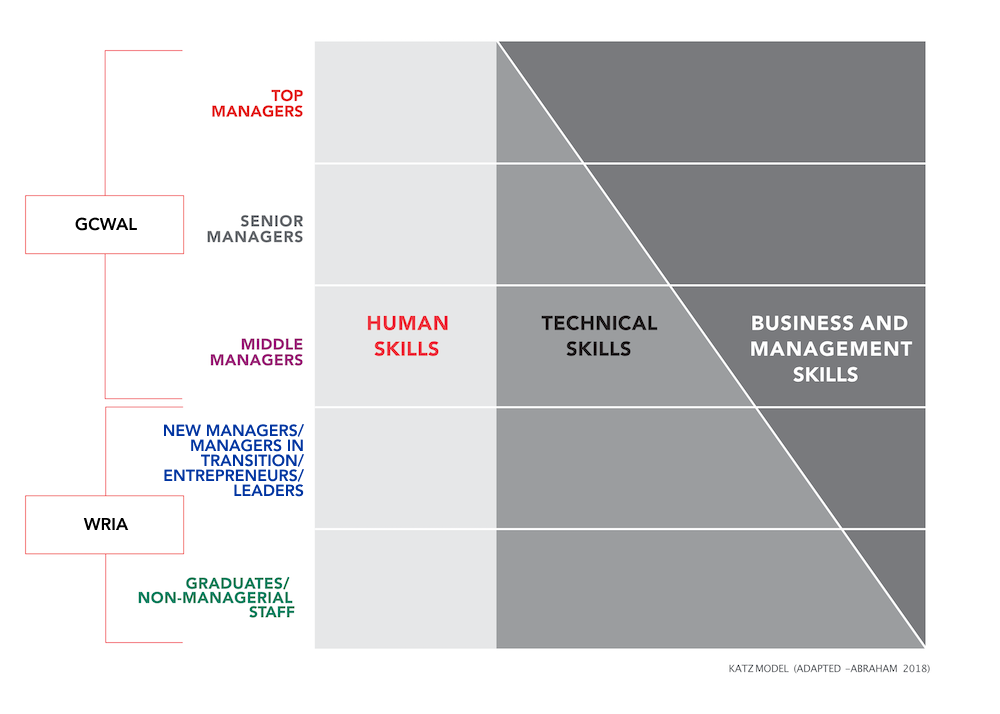
The diagram shows the skills that managers need to be effective in their careers. It can be seen that Human Skills are constant throughout the individual’s career starting from the entry level up to top management level. However, the need for Technical Skills decreases as the managers progress in their career. Conversely, the managers need more Conceptual Skills with every move into a higher management position. Therefore, the skills required in the human and conceptual areas of management learning will differ depending on the individual’s level in the organisation, be it graduate, middle or top management.
Since present and potential managers would have acquired technical skills as part of their higher or college education or previous work experience, our programmes focus only on developing the Human Skills and the Conceptual Skills (namely business and management conceptual skills).

All WRIA programmes use the WAL formula of
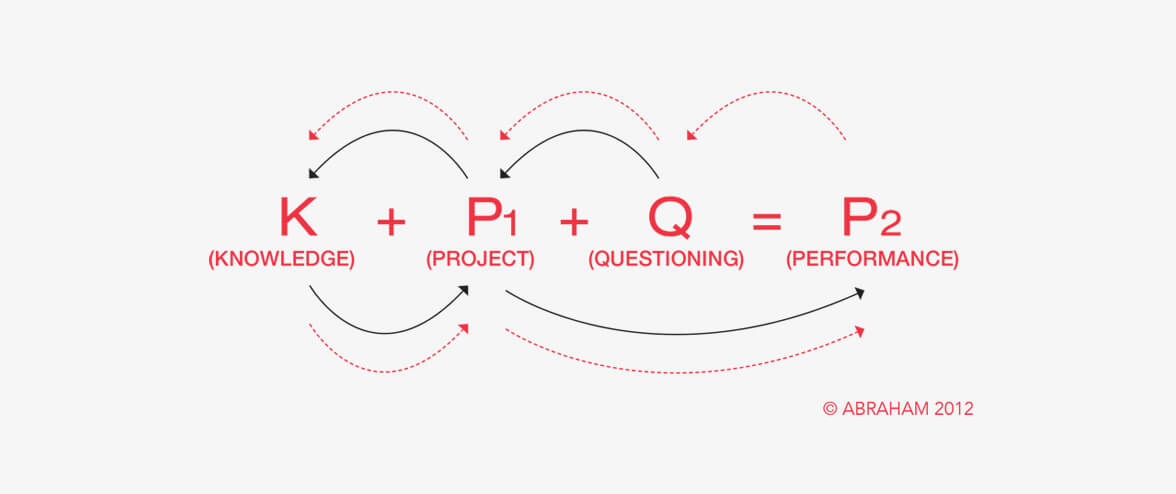
K + P1 + Q = P2 as shown below:
All WRIA programmes use the WAL formula of
K + P1 + Q = P2 as shown below:
During a WRIA programme, participants will:
Reflect and apply relevant Knowledge (K) in the planning and implementation of the Work-Based Learning (WBL) project.
Critically reflect on a WBL Project (P1) to address a problem or need in their departments.
Question (Q) how to solve a problem by searching for ideas to help plan the WBL project.
Achieve Performance Outcomes (P2), including the WBL project outcomes, process outcomes, and learning outcomes.
The formula K + P1 + Q = P2 shows that the natural starting point is the Q. The participants will start by asking questions about a problem, identify a work-based learning project P1 to address the problem, then move on to read about the relevant knowledge K on this subject. Armed with that material, they will go back to P1 to see if the explanations make sense, and then they can move towards achieving performance outcomes P2, namely project, process, and learning outcomes.
But that cycle is not the end of it because, on the basis of what they have learnt, they will now want to return to the questioning stage and repeat the whole process. They can repeat the cycle again and again as each time their understanding will be refined by more practical experience. Knowledge and practice, as they will discover, go hand in hand and this formula helps to show how this is achieved.
Currently, WRIA delivers the following Individual Change programmes:
Other negotiated customised work-based learning programmes for individual change can be developed to meet organisational needs.
The Work-Based Learning Project (P1)
The WR project will develop the participants who are in transition to become work-ready in an authentic and engaging way. As the participants develop their plans for the implementation of their WR projects for or with their respective managers or staff, they will learn how to take initiative and responsibility to become empowered to make a difference for themselves and their team members as they work with, work for, and work through their team members. Participants also, depending on the level of work-readiness programmes, will read the relevant business or management knowledge (K) and apply this to the WR projects. They can repeat the cycle again and again as each time their understanding will be refined by more practical experience. Knowledge and practice, as they will discover, go hand in hand and this formula helps to show how this is achieved.
Critical Reflection
The process of undertaking the WR project (P1) is built around critical reflection and questioning (Q) and the learnings that flow from the work on the project. So often in the busyness of our lives we tend to react quickly to what is before us and move on to the next thing that needs to be done. Careful thought, meditation and reflection about what we are faced with and what we might do, generally brings considerable benefit and richness to our actions. WRIA uses the term “reflection” to cover this ability to engage in questioning, careful thinking and finding insights about what has happened and what we have learned. WRIA programmes are designed to allow this to happen through its reflective and action oriented learning practice processes.
The participants will be supported throughout the programme at allocated times by a WRIA programme facilitator and the line manager who will provide verbal and written feedback on their reports and discuss their progress on the development of their projects with their managers on the issues encountered and potential solutions to the issues and challenges. In addition, the participants will meet their respective managers regularly on their WBL projects.
Triangulation Process
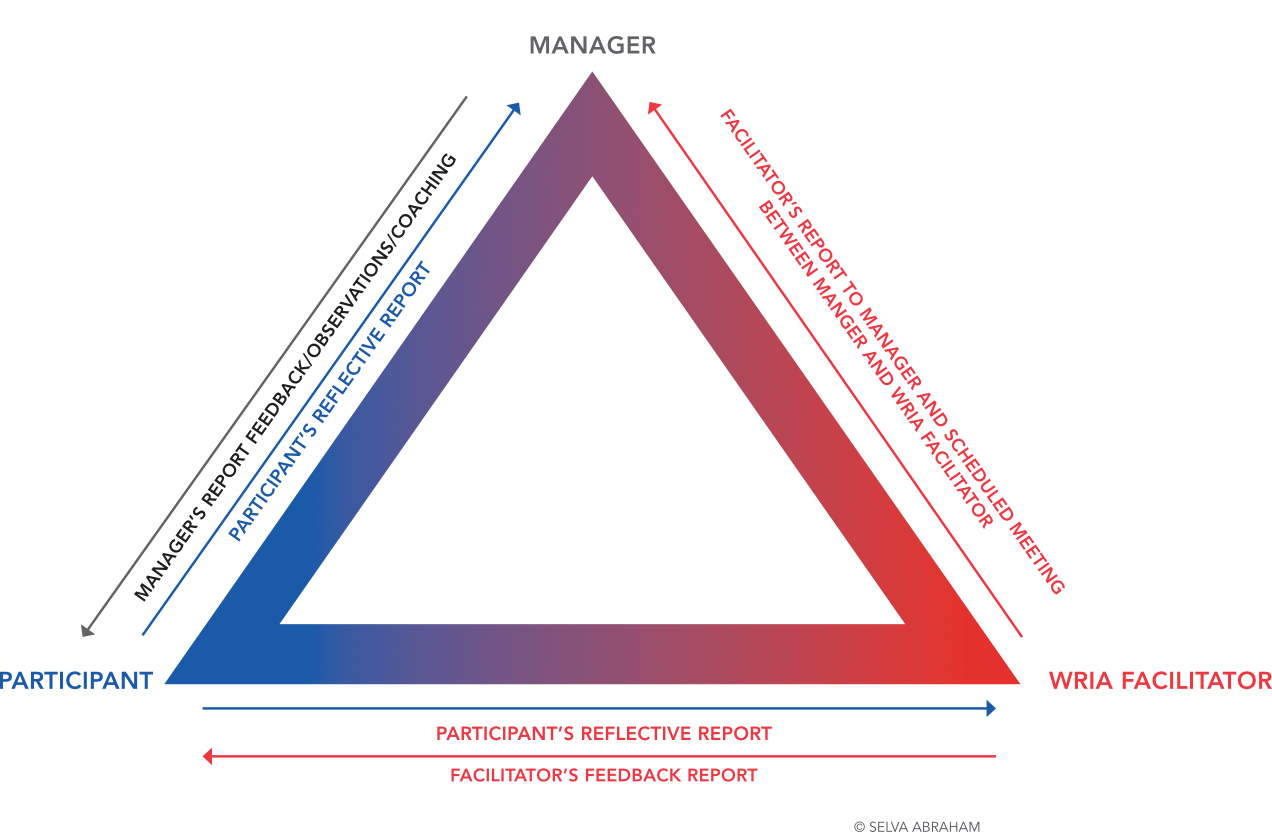
The WRIA programmes have a feedback triangulation process for the development of participants’ work readiness skills as shown in the diagram.
The participants will reflect on their development through their Monthly Reflective Reports, the WRIA Facilitator provides feedback on the reports and their Manager will review both participants’ reports and the WRIA programme facilitator’s feedback against their own observations of the participant’s progress.
This process also provides an opportunity for the manager to monitor the participant’s development of their work readiness skills and coach and mentor the participant. Thus, the participant receives written feedback from both the WRIA facilitator and the manager and additional coaching for their development by the immediate manager.
The diagram illustrates the Work-Based Triangulation Process
Participant Support
The participants will be supported throughout the programme at allocated times by a WRIA programme facilitator and their respective managers who will provide written feedback on their reports as well as present webinars for their cohort to discuss their progress on the development of their projects, issues encountered and potential solutions to the issues and challenges. In addition, the participants will meet their respective managers regularly on their WBL projects and other related work assigned to them.
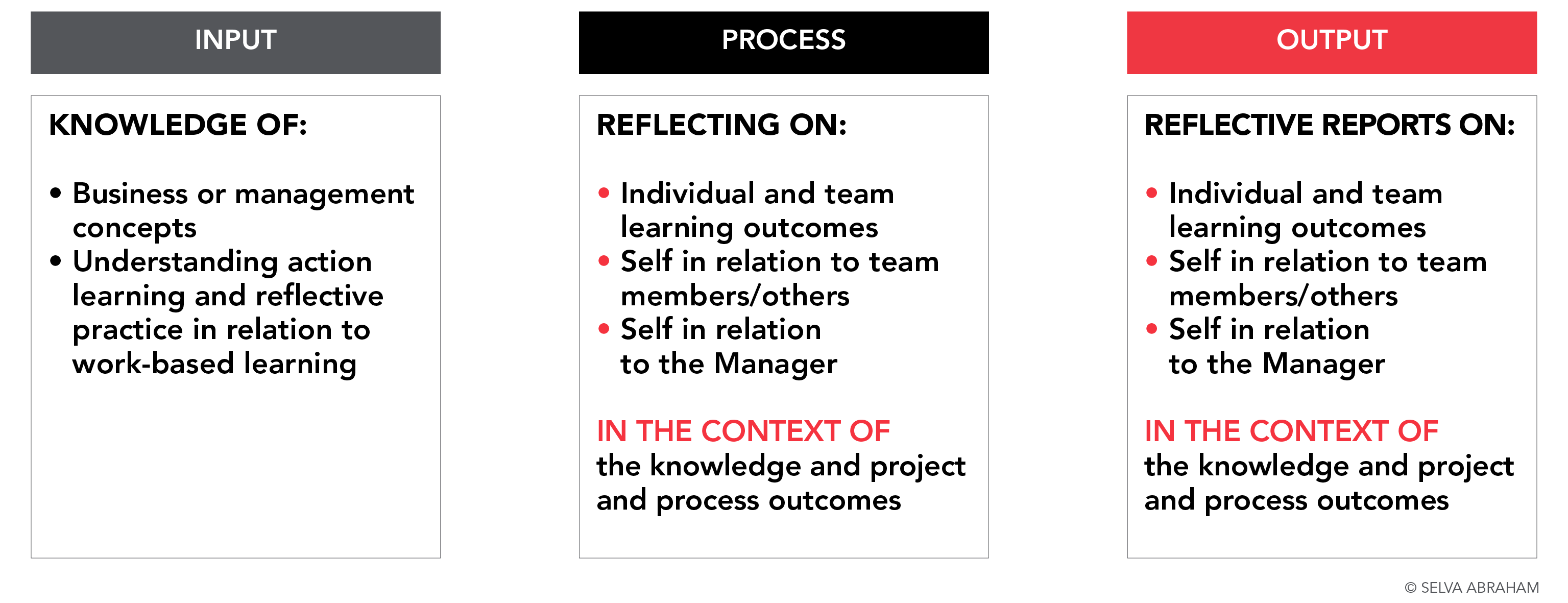
The diagram below illustrates the input, process and outputs of the work-based learning approach used in WRIA programmes.